Case study · Industrial and chemicals · Mining services and technology · 8 min read
Source: Pricing Insight engagement records, including signed proposals, workshop minutes and reports, and correspondence with Orica, 2018 to 2020. Participant numbers from the attendee lists: 18 in Jakarta, 20 in Udaipur and 17 in Raipur. Company facts from Orica, including its FY25 Annual Report.
A technology business, bought by procurement on price. Orica's offer to mines combined explosives with blasting technology, digital tools and technical expertise, and its value showed up after the blast, in fragmentation, downstream productivity and safety. Its sales teams in Asia met buyers who ran tenders, reverse auctions and price-led negotiations, and who saw a commodity. Orica's Managing Director Asia engaged Pricing Insight after traditional sales training proved too generic for that market. The Customer Value Discovery program ran two-day workshops in Jakarta in July 2019, and in Udaipur and Raipur in India in November 2019, on the teams' own live accounts. Orica developed more sophisticated approaches to selling what its customers had typically treated as a commodity. Participants described the program as far more sophisticated and practical than the sales and negotiation training they had undertaken before, and Orica's teams reported that several significant negotiations were more profitable as a result.
| Client | Orica Mining Services, Asia: PT Orica Mining Services in Indonesia, and Orica's India business. Orica supplies commercial explosives, blasting systems and technical services to mining, quarrying and infrastructure customers. |
| Commissioned by | Managing Director Asia. The India workshops were requested by the Business Manager, India. |
| Service | Customer Value Discovery program: a pricing capability diagnostic, online pre-work, two-day value pricing and negotiation workshops, and written action plans. |
| Status | Realised, as reported by Orica's teams: several significant negotiations more profitable. Not quantified. |
| Audience | Around 55 sales, commercial, technical services and site staff. |
| Locations | Jakarta, Indonesia, 30 to 31 July 2019. Udaipur, 15 to 16 November 2019, and Raipur, 20 to 21 November 2019, India. |
The brief
Show procurement-led customers why a sophisticated mining solution is worth more than its purchase price, using Orica's own customers and accounts.
01A solution sold to buyers who price a product
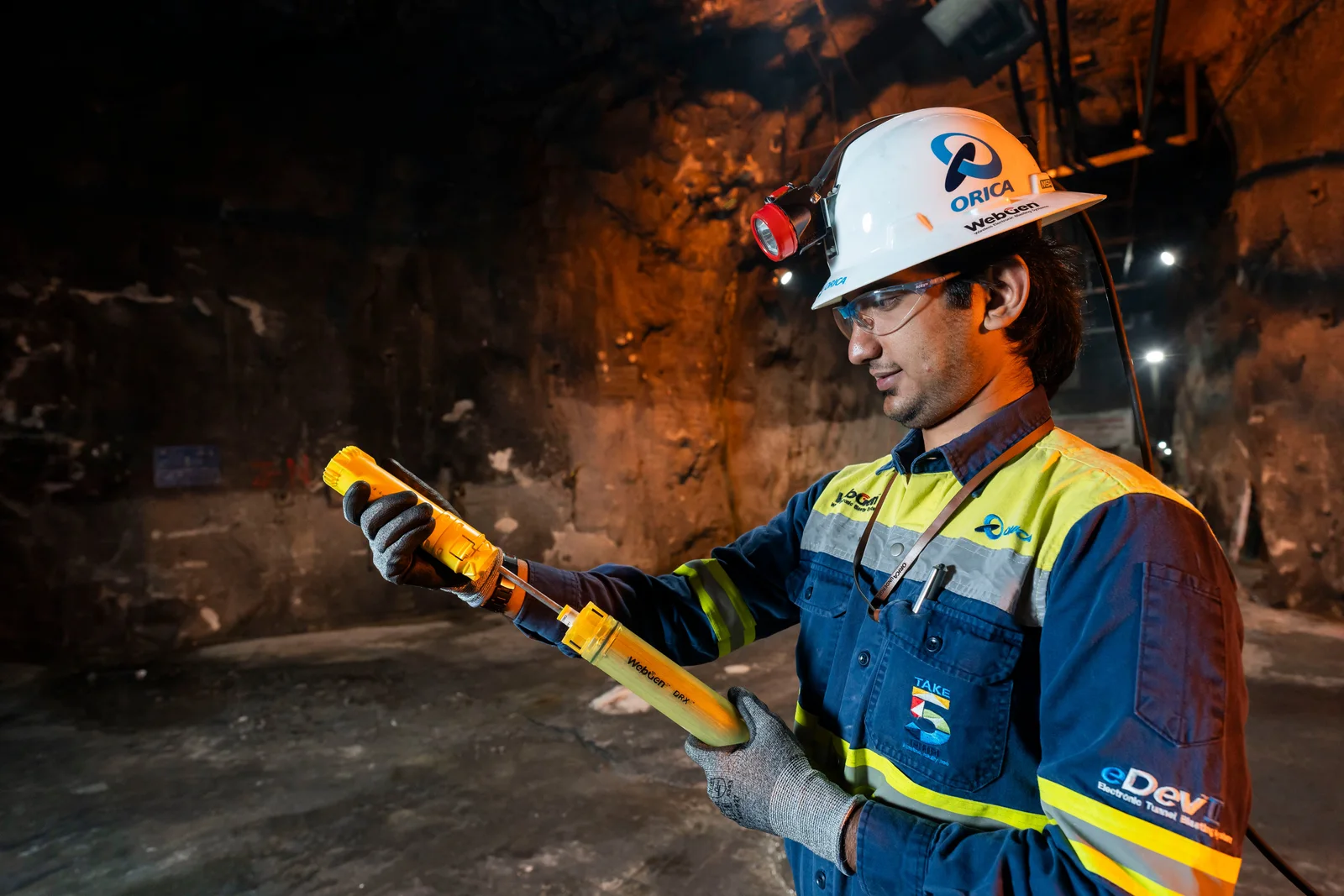
Orica's commercial offer extended well beyond the supply of explosives. Its blasting technology, including the WebGen wireless initiation system, its digital tools and its technical expertise could influence fragmentation, downstream mining efficiency, productivity and safety, as Orica set out in its June 2019 presentation on mining innovation. The mine saw most of that value after the blast. The purchasing team saw an invoice.
Orica today supplies customers in more than 100 countries and employs more than 14,000 people. In the year to 30 September 2025 it reported sales revenue of A$8,144.5 million and EBIT of A$992.2 million, and its annual report attributes margin expansion in blasting to increased uptake of high-margin, premium products and advanced blasting technologies. That is Orica's own account of its recent results; none of it is attributed to this program.
Generic training had not closed the gap. Orica had invested in traditional sales training and found it too generic for selling complex solutions in a procurement-led market. The business needed a method built on its own customers, its own technical offer and its own commercial pressures.
The teams named those pressures themselves.
Price-led procurement.
Price-driven buying, and procurement teams negotiating with competitors in the room. In India, tenders awarded on the lowest price, reverse auctions and government e-tendering.
A narrowing lead.
Competitors catching up and the offer becoming less differentiated, with locally made product and lower-priced rivals competing on price, and prices for the same offer varying widely across the market.
Value given away.
Services given away for free, customers wanting to move risk onto the supplier, and value rarely captured in the contract.
A gap in method.
Teams said they were not good enough at communicating Orica's value and did not have the capability to sell value at risk.
Prices that were hard to hold.
Long negotiations with procurement slowed the teams' ability to compete, and holding prices against cheaper offers was difficult.
"We believe we know the value but the customer may not believe it." Udaipur workshop team.
02What the workshops brought into the open
Teams could describe Orica's technical advantages but had not turned them into the customer's own operating and financial terms. The value case started from the product, not from what the mine wanted to achieve or avoid. Value at risk was the missing half: the cost to a mine of supply disruption, a poor blast or unavailable technical support was rarely quantified, so a cheaper bid looked like a saving with nothing set against it. Proposals, tenders and negotiations started from price, and teams had no shared structure for presenting the customer's problem, Orica's solution and the reasons to choose it.
The Jakarta teams ranked their priorities. Six of the seven quick wins follow.
Understand value at risk.
Quantify what each key account puts at risk with a cheaper supplier. The first step: interview at least three customers using the canvas.
Develop key account plans.
Plans built on each customer's outcomes, not on the product list.
Better competitor intelligence.
Know what competitors offer and charge before the tender opens.
Customised communication on value.
Tailor the value case to each decision-maker: the mine manager, the engineer and the procurement team.
A defined pricing strategy.
A written strategy, supported by a dedicated pricing analyst, the fourth-ranked quick win.
Role plays to prepare for tenders, renewals and procurement meetings.
03What Pricing Insight did
Live accounts, not classroom cases. Pricing Insight's Customer Value Discovery program made live customer situations the centre of the learning. Each participant selected a key account or customer segment and worked through the outcomes that customer wanted to achieve, the problems it needed to solve and the risks it wanted to avoid.
Started with a diagnostic and pre-work.
An online pricing capability diagnostic, reported by country, then online pre-work, a Price Setting Fundamentals workbook and a Customer Value Canvas for each participant's nominated account.
Ran two days in Jakarta.
On 30 and 31 July 2019, three teams worked on specific mining accounts using three tools: the Customer Value Canvas, the Pricing Diagnostic canvas, and the 11 Step Pitch canvas for proposals, tenders and negotiations.
Made customer value specific.
The canvas separated value in use from value at risk: production continuity, blast outcomes, operating efficiency, security of supply, safety and problem-solving support. The aim was to find which differences mattered to a particular customer and what evidence proved them, not to assume every technical advantage deserved a premium.
Wrote it up and set the start.
Pricing Insight sent minutes, a Pricing Capability Scorecard and the workshop tools on 9 August 2019, with the ranked quick wins and a three-step start for each.
Took the program to India.
The India business manager attended Jakarta and asked for the program to run in two locations for his teams. Udaipur and Raipur followed in November 2019, with heavier pre-work and canvases built on live accounts in steel, cement, underground copper, infrastructure, coal, iron ore and the trade channel.
Teams who can show a procurement-led buyer what a mine gains, and what it puts at risk, by choosing on price.
Connecting value discovery with negotiation. The India reports carried customer value canvases, 11 Step Pitch work and a plan for testing each canvas with the customer. They set three initiatives: define customer value; improve marketing, sales and negotiation skills; and develop and publish an Orica pricing strategy, moving away from cost-plus pricing towards value-based approaches. The recommendations covered preparation for demanding procurement conversations: clearer account plans, communication tailored to each decision-maker, and rehearsal of contract renewals, tenders and requests for additional services.
04What changed: a sharper way to sell and more profitable negotiations
Orica developed more sophisticated approaches to selling what its customers had typically treated as a commodity. Teams left each workshop with written analysis of their own accounts: customer value canvases, structured pitches and a ranked list of actions.
Participants described the program as far more sophisticated and practical than the sales and negotiation training they had undertaken before. Orica's teams reported that several significant negotiations were more profitable as a result of the training.
The work continued after the classroom. Following Udaipur, the India business manager set a review call for 27 November 2019 and a follow-up call every fortnight after it, with the Raipur teams joining and questions channelled to Pricing Insight. In January 2020, India sent Pricing Insight the customer value canvases from all its territories. Orica's Managing Director Asia has since acted as a reference for Pricing Insight.
Status: realised, as reported. Orica's teams reported that several significant negotiations were more profitable as a result of the training. The improvement was reported by Orica; it was not quantified or independently measured by Pricing Insight, and no price, margin or win-rate figure is claimed. Customer names, diagnostic scores and fees are not disclosed.
05The Pricing Periodic Table elements this work built
Eight elements built, four identified for Orica's management. The Pricing Periodic Table maps 61 elements of pricing capability in nine domains across three pillars: Value, People and Structures. The program built the Value elements behind the customer case and the People elements behind the negotiation.
03 Vq, Value quantification and 05 Dr, Delivery reliability and value at risk: what each mine gains from Orica's solution and what it puts at risk with a cheaper supplier. 02 Df, Differentiation: the differences that matter to a particular customer, and the evidence that proves them. 29 Vs, Value selling and 30 Vt, Value marketing and sales tools: the Customer Value Canvas and the 11 Step Pitch canvas. 34 Ng, Negotiation skills, 37 Bt, Buyer and procurement tactics and 39 Ka, Key-account negotiation plans: preparation for procurement meetings, tenders and renewals. The outlined elements are the structural priorities the teams ranked: a written pricing strategy (06 Ws), tender discipline (18 Tp), a dedicated pricing analyst (26 Pf) and competitor intelligence (41 Ci).
06Three lessons for a CEO
Train on your own accounts
Orica had already tried generic sales training. The workshops worked on live mining accounts, so each concept became an analysis of a customer the team would meet the following week.
Price the risk, not only the benefit
Procurement compares invoices. A value case that shows what a mine puts at risk with a cheaper supplier, in lost production, a poor blast or no technical support on site, gives the buyer a reason to look past the lowest bid.
Let the business pull the next stage
The India workshops came from a manager who had attended Jakarta and asked for them, and his teams returned their canvases from every territory. A program the line asks for is more likely to be used than one sent down from head office.
07Questions this case study answers
How do you sell a technical mining solution to a procurement-led buyer?
Start from the customer's operation, not the product. Quantify what the solution gives the mine and what a cheaper alternative puts at risk, then present that case in the mine's own operating and financial terms. Orica's teams in Indonesia and India built that case for live accounts using the Customer Value Canvas and the 11 Step Pitch canvas, and reported that several significant negotiations were more profitable as a result.
What should sales negotiation training for B2B teams include?
Work on the team's own customers and live deals, with written analysis and actions at the end. Orica's program combined a capability diagnostic, online pre-work, two-day workshops on named accounts, and minutes with ranked quick wins and fortnightly follow-up. Participants rated it far more sophisticated and practical than the sales and negotiation training they had done before.
How do you hold price against reverse auctions and lowest-price tenders?
Know which differences matter to each customer, and what evidence proves them, before the tender opens. Orica's teams in Raipur and Udaipur faced reverse auctions, e-tendering and lowest-price awards, and the workshops prepared account plans, tailored communication and rehearsals for tenders and renewals.
Related case studies
Negotiation training built on your accounts
The first conversation covers your markets, the procurement pressure your teams face, and how a workshop would be built around your own customers and live deals. Ron Wood, +61 410 534 099.
Ron Wood is the Founder and Managing Director of Pricing Insight, an Australian pricing strategy consultancy he established in 2007. He has worked in pricing for around 30 years, first as a pricing and commercial manager in consumer goods, building materials and capital equipment, and since then across more than 160 pricing engagements. He also founded Pricing University, which has trained more than 5,000 executives.
To discuss a workshop for your team, contact Ron Wood at info@pricinginsight.com.au or on +61 410 534 099, or visit Pricing Insight.
Engagement details are from Pricing Insight's records of the program, including proposals, workshop minutes and reports, and correspondence, 2018 to 2020. Company facts from the Orica FY25 Annual Report and Orica's June 2019 address on mining innovation. Results are as reported by Orica's teams and were not independently measured. Customer names, diagnostic scores and fees are not disclosed. Photography: Orica blasting solutions and on-site services.