
How do you win on lifetime value when procurement buys on purchase price and cheaper parts chase your aftermarket?
Unlock annualised EBIT equal to 1.75–2.5% of revenue within 90 days
You build or import machines that run harder, use less energy and stay up longer, and you stand behind them with parts and service. Then a buyer compares purchase price alone, a will-fit supplier undercuts your wear parts, and the unit is discounted at quarter end on the promise that the aftermarket will make it up. Margin seldom goes in one decision. It drains away through eight familiar habits: value that is never defined, prices built up from cost, a commodity mindset, discounts given to win or keep business, procurement out-negotiating the sales team, increases that never reach the invoice, price structures too tangled to manage, and leaders pulling in different directions.
Eight disciplines win it back: list prices, customer discount levels, overrides, rebates, channel pricing, price optimisation, volume and mix. You know your machines and your customers’ sites better than anyone. We bring 30 years of real-world pricing experience, including our work with equipment makers, importers and dealers, and practical, step-by-step techniques that improve revenue, margins and profitability.
Equipment clients include Hyster-Yale, Ricoh and ITW Proline. 160+ clients since 2007 in Australia, New Zealand, Asia, India, the US and the UK.

Three pressures that squeeze equipment margins
None of them is new. What has changed is that they now arrive together, and each one is a pricing decision as much as a market condition.
Procurement that compares purchase price
- Central purchasing teams run the tender, shorten the vendor list and judge the machine on its invoice price.
- Energy savings, avoided downtime and service intervals drop out of the comparison.
An aftermarket that is no longer protected
- Will-fit parts makers, grey markets and online sellers now compete for parts and service that used to be yours.
- Parts are priced cost-plus and labour rates vary by branch, so the aftermarket rarely recovers the unit discount.
Discounts that peak at quarter end
- Volume targets meet a buyer who has learned that the quote moves in the last week of the quarter.
- Unit discounts are approved case by case, with the margin on the quote out of sight.
Eight ways margin erodes, and eight ways to win it back
Our 16 margin techniques set out where margin leaks and where it can be recovered. In capital equipment, each one takes a familiar form.
Eight ways margin erodes
Undefined value drivers
Sales engineers cannot put a dollar figure on uptime, energy or service, so they lead with purchase price.
Cost-plus pricing
Parts priced as cost plus one mark-up across tens of thousands of lines, whatever each line competes with.
Commodity mindset
“A machine is a machine” becomes the sales story, and the unit is sold on its price alone.
Discounting to win or keep business
Units discounted to buy the installed base, on the hope that parts and service recover it.
Out-negotiated by procurement
Trained buyers run tenders against engineers who have no concession plan and nothing to trade but price.
Price increases that do not stick
Annual price book changes lag factory price and exchange-rate moves, and service agreements renew unchanged.
Tangled price structures
Labour, call-out and mobilisation rates that differ by branch, and service agreements nobody can explain.
Management misalignment
Sales chases units, service chases utilisation, and nobody owns margin over the machine’s life.
Eight ways to win it back
List prices
Each model priced to its application and the value it creates on site, with a floor and an approval path.
Customer discount levels
Clear discount levels for dealers, national accounts and direct customers, set by role and volume.
Overrides and tactical discounts
Discount limits by model and deal size through one desk, with margin shown on every quote.
Rebates
Dealer and customer incentives tied to stock, service and parts pull-through, not to volume alone.
Channel pricing
One set of rules across direct and dealer channels, with dealer net that rewards local service and support.
Price optimisation
Parts priced line by line, service priced from one schedule, and factory cost and exchange-rate moves passed through.
Volume management
Margin by unit, parts and service across the installed base, so volume deals are tested against lifetime return.
Mix management
Options, accessories and service agreements priced in every configuration, so the base unit carries no hidden subsidy.
A 1% price rise on $100m of revenue adds $1m to EBIT, with the same volume and the same cost base.
From and towards: nine elements that decide margin in capital equipment
The Pricing Periodic Table sets out 61 elements of pricing capability in nine domains, across Value, People and Structures. In capital equipment, our work most often starts with these nine.
Value
What the customer gains and how you charge for it
Value quantification
Energy, output and downtime savings calculated for the application and shown on the quote.
Pricing policy and consistency
One method for units, parts and service, with the same rates in each branch.
Value-based agreements
Service agreements priced on the uptime and energy gains they protect.
People
Who decides price and how well they are equipped
Value selling
Sales engineers who open on uptime, energy and cost of ownership.
Concession planning
A planned concession ladder, with price the last item on it.
Deal desk and negotiation governance
Unit discounts approved by model and deal size through one desk.
Structures
The analysis, price architecture and systems pricing runs on
Price-setting method
Wear parts priced to the market, critical parts to the cost of downtime.
Charges for services and extras
Mobilisation, travel, call-outs and after-hours work priced from one schedule.
Quoting speed and tools
Margin in dollars and per cent on each quote before it is sent.
From and towards
How we make it happen
Four stages take an equipment business from the size of the opportunity to prices that hold across units, parts and service.
Diagnose
We analyse unit discount by model, region and dealer, parts margin by line, service rates by branch and margin on service agreements, size the opportunity in dollars and rank the quick wins.
Optimise
We price models by application, parts line by line and service from one rate structure, reprice service agreements on the uptime they protect, and model the effect before anything reaches a customer.
Embed
Sales engineers, service consultants and parts staff get value calculators, a concession ladder, margin on the quote and training to sell uptime and cost of ownership.
Review
We track unit discount, parts margin, service rate realisation and agreement profitability each month, and carry the rules into each price book release.
Capital equipment client results
Each result is labelled. Realised: measured after implementation. Identified: opportunity sized in the diagnostic, before implementation. Figures in Australian dollars.
From an A$100k annual EBIT loss, with discounts controlled by model and sales effort aimed at customers who value uptime.
Read the case studyIdentifiedEquipment sold with managed service contracts, across hardware, services and digital lines.
Read the case studyIdentifiedPricing alignment, value tools and discount governance across four business units.
Read the case studyPrice optimisation programs return between 5 and 10 times their cost in year 1.
Four questions equipment executives ask
Can we earn more on the aftermarket without losing service customers?
Often, yes. Much of the gain sits in lines and branches where price has never been set deliberately. Critical and captive parts, uneven labour and mobilisation rates and discounted service agreements can be repriced while common wear parts are held to the market.
Can we stop discounting the unit and still win the deals that matter?
Yes, when the discount is aimed. Hyster-Yale Asia Pacific controlled discounts by model and focused its sales effort on the right segments, and turned an A$100k annual EBIT loss into an A$3m gain within 12 months.
Can our sales engineers sell on uptime?
They can, once uptime is put in dollars for your customer’s application: the cost of an hour’s stoppage, the energy saving over the machine’s life, the service intervals. With those figures on the quote, the discussion moves from purchase price to running cost.
Will the improvement hold after the next price book?
It holds when the rules are written into the price book, the quote and the approval levels, and someone reviews unit discount, parts margin and service rates each month.
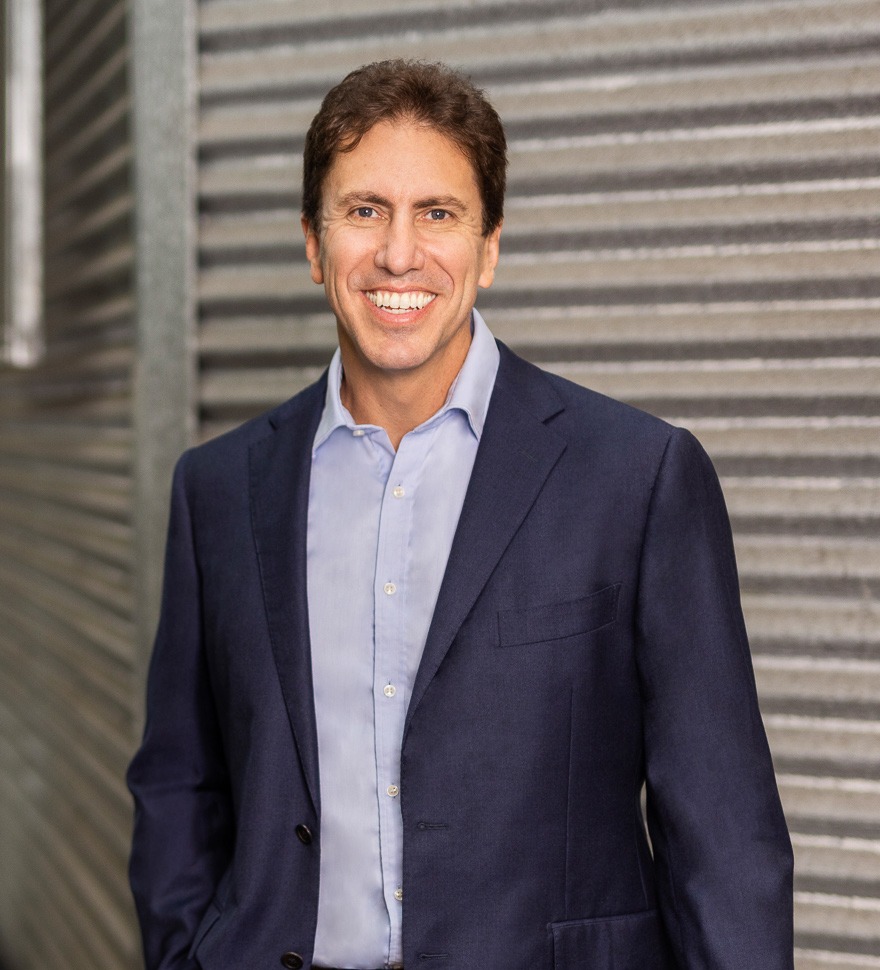
Ron Wood, Founder and Managing Director
Ron began his career as a pricing and commercial manager in industry, including building materials, FMCG and capital equipment. Since founding Pricing Insight in 2007 he has worked with more than 160 clients in Australia, New Zealand, Asia, India, the US and the UK, among them the equipment businesses Hyster-Yale Asia Pacific, Ricoh Australia and ITW Proline.
He leads each engagement with a senior associate, working alongside your sales engineers, parts and service managers and dealer principals. Your team knows the machines and the sites. We bring the method, the evidence and the discipline that make new prices hold.
Discover your margin improvement opportunity
Talk to Ron Wood about the pressures on your prices: the buyer comparing purchase price, the will-fit part on the next order, the discount waiting at quarter end. In a 30-minute call he will work through where margin is made and lost across your units, parts and service, and the first steps to capture more of it. Call +61 410 534 099 or email info@pricinginsight.com.au.
Discuss your margin opportunities