Devro: higher price increases negotiated on proven customer value
We helped Devro find and prove new sources of customer value, then equipped sales teams across several countries to price and negotiate on that value.
Client: Devro, Australia and New Zealand, with sales teams in several countries
Industry: Food manufacturing (collagen casings for sausages and processed meats)
Services: Customer Value Discovery, value-based contract strategy, the Devro Production Audit, and Pricing University sales education
Led by: Ron Wood, Founder and Managing Director, Pricing Insight
In brief
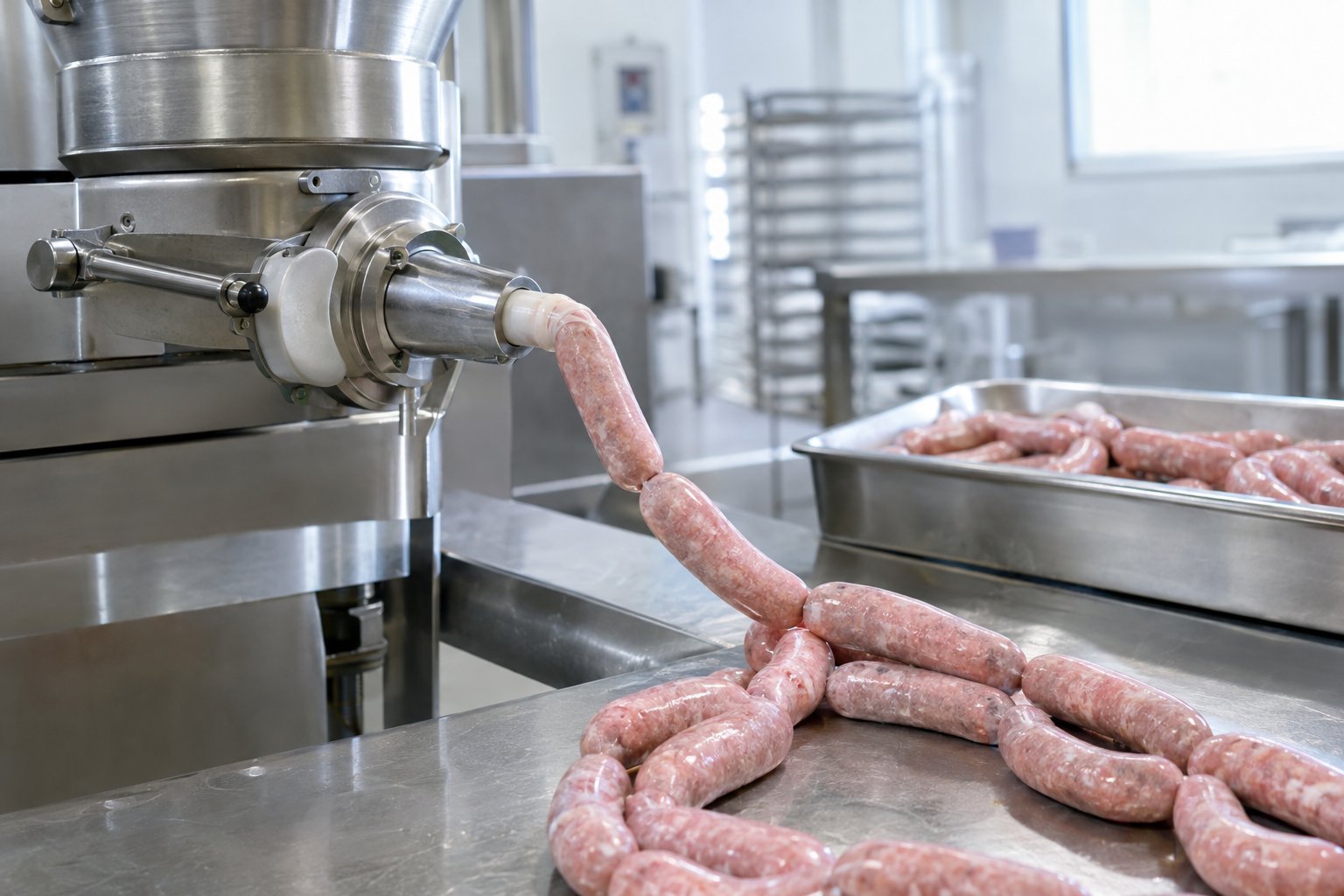
Devro makes the collagen casings that give sausages their shape and bite, and sells to food manufacturers that negotiate hard on every cent. Pricing Insight worked with Devro over several years, first to find and prove the value customers receive beyond the casing itself, then to turn that value into contract strategy, a production audit tool for the sales team and a value-based pricing education program for teams in several countries and time zones. The work helped Devro negotiate higher price increases in Australia and New Zealand, negotiate with more confidence against professional procurement teams, and defend its prices when competitors offered product up to 50% cheaper.
Key facts
- Client: Devro, one of the world's leading suppliers of collagen casings for food, with manufacturing sites in Australia, China, the Czech Republic, the Netherlands, the US and the UK (Devro)
- Ownership: Part of the SARIA Group since April 2023 (SARIA)
- Customers: Food manufacturers, from national smallgoods brands supplying the major supermarkets to regional producers
- Competitive pressure: Lower-priced imported casings, with competitor offers up to 50% below Devro's price
- Value evidence: A structured value driver analysis covering 21 drivers across six categories, scored by customers and by Devro's own team
- Sales tool: The Devro Production Audit, which measures yield, breaks and machine performance on the customer's own line and converts the result into kilograms per hour
- Education: Pricing University's 12-lesson pricing fundamentals course, delivered to learner groups across several countries, with live sessions run separately for Eastern and Western time zones
- Outcome: Higher price increases negotiated in Australia and New Zealand, more confident negotiation with procurement teams, and prices defended against much cheaper alternatives
"Undertaking the Customer Value Discovery program helped us identify additional sources of value and allowed DEVRO to negotiate higher price increases both in Australia and New Zealand."
Tim Hulme, Sales Director Australia and New Zealand, Devro
Client overview
Devro describes itself as one of the world's leading suppliers of collagen casings for food, used by customers in the production of a wide variety of meat products, particularly sausages (Devro). Collagen is turned into gel, tubular casing and film at its manufacturing sites around the world. In Australia, the business has supplied casings since the early 1970s (Food Processing) and operates a plant at Kelso, near Bathurst in New South Wales, established in 1979 (Devro results presentation).
SARIA completed its acquisition of Devro in April 2023. Devro is now part of a group with seven casing facilities worldwide, shipping to more than 90 countries (SARIA).
What pricing challenge did Devro face?
For many years Devro faced little direct competition in Australia and New Zealand. That changed as cheaper imported casings arrived. The business described the pressure publicly at the time: "Up until the last few years, there were no direct competitors in the Australian and New Zealand market. There is now increasing pressure from the cheaper foreign imports" (Manufacturers' Monthly).
Several pressures arrived at once:
- Price-led competitors. Some competing casings were offered at up to half of Devro's price. On a price-per-metre comparison, Devro looked expensive.
- Professional procurement. Large food manufacturers supplying the major supermarkets ran disciplined buying processes, used competing quotes and pushed for price cuts at each contract round.
- Value that customers did not see. Much of what Devro provided was invisible on the invoice: technical support on the production line, consistent casing performance, local supply, food safety certification and flexible trading terms.
- A sales team trained to sell product, not value. Account managers knew the product well, but had no shared way to measure and present what the product was worth to each customer.
The question for leadership was not whether Devro could match cheaper offers. It was whether Devro could show customers, in their own numbers, why the casing that costs more per metre often costs less per kilogram of finished product.
Objectives of the engagement
- Identify the sources of value customers receive from Devro, beyond the price of the casing.
- Measure how customers rate those drivers compared with Devro's own team and with competing suppliers.
- Turn the value evidence into contract strategy and a sample supply agreement for key accounts.
- Give the sales team a practical tool to quantify value on the customer's production line.
- Support price increases and negotiations with evidence, not argument.
- Build lasting value-based pricing capability across sales teams in several countries.
How did Pricing Insight approach the work?
The work ran in stages over several years. Each stage built on the evidence from the one before.
1. Customer Value Discovery: what do customers value, and do we know it?
We started with a value driver analysis. Devro's own team scored its performance on each driver and how important they believed it was to the customer. Customers then scored the same drivers independently, in structured interviews. The drivers were grouped into value in use (tangible, transactional and tradeable value) and value at risk (supply chain, product and service, and technical and innovation risk).
The first round in 2012 produced a clear finding. On most drivers, customers rated importance higher than Devro's own team did. Food safety certification, environmental accreditation, trading terms, national distribution that lowers customer inventory, and the ability to customise colour, bite and strand length were all valued more highly by customers than by the people selling them. In the language of the analysis, Devro was undersold: the business was giving away value it did not know it had.
The top value drivers for customers were not the product features in the brochure. They were the capacity to handle seasonal demand peaks, reliable on-time delivery from a local manufacturing base, and product customisation.
2. A fuller value map, compared with the main competitor
In 2013 the analysis was expanded to 21 value drivers across six categories, with Devro's performance scored against its main competitor. The new drivers included:
- Casing yield and efficiency audits that reduce the customer's manufacturing cost and increase output.
- Round-the-clock technical support for line breakdowns, recalibration and performance tuning.
- Contract price stability, which protects customers from volatile spot pricing.
- Trading terms well above the industry norm, which help customer cash flow.
- Food safety and provenance, including freedom from BSE, traceability of raw materials back to the farm, export certification and the highest level of food safety certification.
- Business continuity, through global supply options, emergency stock and capacity for seasonal events such as Christmas and Easter.
The widest margin over the competitor sat in value at risk: the cost to a customer's business, and to the supermarket brands it supplies, if something went wrong. A cheaper casing saves money only until a line stops, a batch fails or a food safety question reaches the retailer.
3. Contract strategy and value discovery workshops
The value evidence fed directly into contract strategy. We developed a value management system for Devro and a sample supply agreement for a key account, built to be rolled out to managers for use in their own territories and key accounts. The success measures agreed at the outset were revenue protection, revenue growth, margin improvement and a repeatable method the wider business could use.
In New Zealand, the program followed a structured plan: score the value drivers with customers, compare performance with the competitor, run a value discovery workshop with a leading customer, publish the final value map, communicate value to the market and then plan the price increase. The price rise strategy came last, once the value case was in place.
4. The Devro Production Audit: putting a number on value
Customers rarely dispute that technical support and consistent casing are useful. The harder question is what they are worth. To answer it, we worked with Devro to design the Devro Production Audit, a value driver analysis tool that the sales and technical teams complete on the customer's own production line.
The audit covers four areas:
- Machine settings: running speed, twists, tension, portion volume and calibre, recorded as set and as run.
- Machine components: horns, tension screws, voiders and other parts checked for defects that cause breaks.
- Casing performance: shirr, ends, knots and calibre checked against specification.
- Operator skill: each operator assessed from development required through to role model, with advice on settings and practices.
The tool compares actual yield with the theoretical maximum for that product and line, then shows how much output is lost to running breaks and to unnecessary twists. The result is expressed in the customer's own terms: kilograms per hour, and the percentage gain available from each fix. Repeat audits track progress over time.
In the worked example built into the tool (illustrative data), reducing running breaks from 13 to 1 per 120 strands and trimming twists lifted yield from about 1,400 to about 1,580 kg per hour, an improvement of close to 13%. For a food manufacturer, that is extra output from the same line, the same labour and the same meat, and it is worth far more than a lower price per metre of casing.
The audit changed the sales conversation. Instead of defending a price, account managers could show a production manager and a procurement manager the measured cost of switching to a casing that breaks more often.
5. Pricing University: value-based pricing education across countries and time zones
Value evidence only pays if the people negotiating use it. From 2018, Devro's Sales Director for Australia and New Zealand, who also led commercial excellence for the business, began working with Pricing Insight to extend the approach to commercial teams beyond Australia.
From 2023, learner groups across several countries completed Pricing University's 12-lesson pricing fundamentals course on value-based pricing, price setting, price increases and negotiation. Each course ended with a revision lesson and an assessed test before certification. Live engagement sessions ran separately for Eastern and Western time zones, so that teams in different regions could join at a reasonable hour. Progress was reported to Devro each week, and progress was among the best Pricing Insight has seen across its client programs.
Learner feedback showed where the method took hold fastest. Markets where Devro sells direct to food manufacturers adopted value-based pricing quickly and led the pricing push. Markets that sell mainly through distributors found it harder, which pointed to the next stage of work: value-based negotiation for complex and distributor-led accounts.
What did Devro achieve?
- Higher price increases negotiated in Australia and New Zealand. The value evidence gave account managers the case to ask for and secure higher increases than a cost-based approach would have supported.
- More confident negotiation with procurement teams. Sales teams entered negotiations with customer-scored value drivers and audited production results, rather than a price list and a discount.
- Prices defended against much cheaper competitors. Faced with competing product up to 50% cheaper, Devro could show customers the total cost of a cheaper casing in yield, downtime and risk, and defend its price rather than matching the offer.
- A repeatable sales tool. The Devro Production Audit gave sales and technical teams one shared way to measure value on the customer's line and to track improvement over time.
- Value-based pricing capability across countries. Learner groups in several countries completed value-based pricing education, giving the business a shared language for price setting and negotiation.
"I can highly recommend Ron Wood and his team at Pricing Insight. We have worked with them for 3 years and the knowledge gained by my team has been absolutely measured on our bottom line."
Tim Hulme, Sales Director Australia, Devro
Why use a pricing specialist for this work?
Customer evidence, not internal opinion. The most important finding came from comparing what Devro's team believed customers valued with what customers said. A pricing specialist brings a structured method for that comparison and the independence to report what it shows.
Value in the customer's own numbers. Procurement teams discount claims. They take measured results seriously. The Devro Production Audit converts technical support into kilograms per hour on the customer's line, which is the language both production and procurement understand.
Capability that stays with the business. Pricing Insight has trained more than 5,000 executives since 2007. Education built around the client's own value drivers means the method keeps working after the consultants leave.
What this means for food manufacturers and ingredient suppliers
- Your customers may value you more than you think. Ask them, in a structured way, and compare their scores with your team's. The difference is where price is being given away.
- Price per unit is the wrong comparison. A cheaper input that lowers yield, stops lines or raises food safety risk costs more per finished kilogram.
- Measure value on the customer's line. A production audit turns technical service from a free extra into evidence a buyer can take to their finance team.
- Value at risk carries weight with retail-facing customers. Food safety, traceability and continuity of supply protect the customer's brand and its supermarket relationships.
- Train the people who negotiate. Value evidence that stays in a workbook earns nothing. Sales teams need the skills and confidence to use it in front of procurement.
Frequently asked questions
What is Customer Value Discovery?
Customer Value Discovery is Pricing Insight's structured method for finding and measuring the value customers receive from a supplier. Customers and the supplier's own team score the same value drivers for performance and importance, and the differences show where value is undersold, oversold or not yet communicated. Read more in our Customer Value Discovery whitepaper.
What is the Devro Production Audit?
The Devro Production Audit is a value driver analysis tool developed with Devro. Sales and technical staff use it on the customer's production line to record machine settings, component condition, casing performance and operator skill, then calculate the yield lost to breaks and unnecessary twists in kilograms per hour.
How can a supplier defend price against a competitor that is 50% cheaper?
By showing the total cost to the customer, not the price per unit. If a cheaper input lowers yield, causes more line stoppages or adds food safety risk, the customer pays more per finished product. Measured evidence from the customer's own operation makes that case far stronger than a sales claim.
What is value at risk?
Value at risk is the cost a customer avoids by choosing a reliable supplier: lost production, product recalls, failed audits, supply shortages at peak season and damage to the customer's own brand. For food manufacturers supplying supermarkets, it is often the most important source of value and the least discussed.
How does Pricing University support value-based pricing?
Pricing University is Pricing Insight's online pricing education program. Learners complete structured lessons on value-based pricing, price setting and negotiation, with live sessions and progress reporting. Programs can be delivered to teams across countries and time zones. See the Pricing Masterclass 12-week program.
Is this result realised?
Yes. Devro's Sales Director for Australia and New Zealand has stated that the Customer Value Discovery program allowed Devro to negotiate higher price increases in both Australia and New Zealand.
About the author
Ron Wood is the Founder and Managing Director of Pricing Insight. He has more than 30 years in pricing, has worked with more than 160 clients across Australia, New Zealand, South East Asia, India, the United States and the United Kingdom, and has trained more than 5,000 executives in value-based pricing.
Talk to us about Customer Value Discovery
If your customers compare you on price per unit while your value sits in their production results, we can help you find it, measure it and price it. Contact Ron Wood at info@pricinginsight.com.au or on +61 410 534 099, or visit Pricing Insight.


Let’s work together
Whether you're ready to optimise your pricing or want to explore what's possible, we'd love to hear from you.