
.webp)
Preparing for a price negotiation means setting five things before the meeting: the target, the floor, the value case, the buyer's real alternative and a priced list of trades. In Pricing Insight's work, a seller who knows only the list price concedes, and each concession repeats on every order for as long as the price stands.
A seller who walks in knowing the target, the floor, the value case, the buyer's real alternative and a priced list of trades holds price. A seller who knows only the list price concedes, and each concession repeats on every order for as long as the price stands.
An Australian foodservice packaging supplier built a negotiation pack for each of its six distributors, with a projected gain of about A$1.9 million a year, most of it from gaps in range rather than price. A New Zealand team used a two-minute pack on one account worth about A$6 million a year and realised an 8 per cent increase, about A$480,000 a year annualised. In illustrative figures, a 5 per cent discount on an order of about A$400,000 at an 18 per cent margin needs about A$111,000 of extra sales to earn back.
Four actions follow. Set an opening, target and walk-away price in writing before every significant negotiation. Build the value case from the Customer Value Discovery canvas. Give Finance the job of pricing every concession and every get. Require a short written plan, approved before the meeting and reviewed after it, for each key account.
Where is margin held or given away?
Price position, the corridor of target, floor and ceiling, and the authority limits that give each discount an owner are all held or given away in the negotiation itself.
A concession costs more than it appears to on the day: it repeats on every order, becomes the starting point for the next negotiation, and other customers hear about it. When one team at a decorative panels business stopped discounting, most customers paid.
In the businesses I have worked with, the buyer is usually better prepared than the seller. Buyers know the alternatives, the deadlines and the tactics. Sellers often know the list price, the published starting price before any discount, and rarely know the floor or the cost of a discount.
An Australian supplier of foodservice packaging closed that gap. It sold hot cups, lids, takeaway containers and cutlery through six large distributors, and each year the talks came down to one number: the size of the increase. Before the next round, the pricing team built a pack for each account showing the economics after rebates, which are payments back to the customer after the sale, the account's prices against a modelled fair price, its range against similar accounts and the concessions in order.
A capped price rise, averaging about 1.2 per cent, was worth a projected A$0.3 million a year across the six. Gaps in range were worth a projected A$1.5 million a year in gross margin, which is sales less the direct cost of the goods sold. The distributor with the keenest prices could carry a rise of only about 0.4 per cent, yet had the largest range gap of the six. On accounts with rebates, about 4 to 7 per cent of any increase flowed back through volume-linked rebate lines. Each figure is rounded, so the parts do not add exactly to the total.
Of the six accounts, three were run as price-led negotiations and two as range-led conversations. Every capped rise and list of concessions went to the pricing committee before any customer meeting. The projected gain was about A$1.9 million a year.
How do pricing power and the value case decide how much to push?
Pricing power is the ability to hold or raise a price without losing profitable sales. It comes from nine elements in three groups. The strategic group covers the customer's need, the business's pricing strategy and how rational its competitors are. Relationships, brand and price architecture make up the structural group; negotiations, rebates and price overrides make up the operational group.
Each element has a low-power and a high-power state. An urgent, complex, high-risk need gives the supplier more power than a planned, simple one, and a seller who negotiates on value has more than one who bargains from fixed positions. A customer in a strong tier can take the full move with standard notice; a customer in a weak tier needs its service fixed before price is raised.
Opening and target prices rest on a value case built from the Customer Value Discovery canvas. The canvas sets out what the customer gains from the offer, its value in use, and what the supplier protects it from, its value at risk. Value in use has three frames: Tangible, the What (grade, specification and performance); Transactional, the How (delivery, lead times and ease of ordering); and Tradeable, the How much (pricing model, terms and rebates). Value at risk covers supply failure, product or service failure, and technical support failure.
Five steps turn the canvas into a number: Discover, Map, Score, Monetise and Pitch. The customer rates the importance of each item from 0 to 10, and rates the business and its competitor on performance from 0 to 10. The largest variances in weighted score are converted into dollars the customer's finance team can test, such as downtime per day or capital avoided.
In a teaching example, a plastics maker supplying a cable producer scored 27 items with the customer. The evidence supported a value premium of about 35 per cent, and the supplier kept the business at a price about 20 per cent above the lowest bid. For preparation, the canvas gives the seller an opening that can be defended line by line, and shows which items this buyer rates most important, so the concession list can be built around them.
Why is negotiation skill mostly preparation?
Negotiation skill is the ability to prepare for and run a price negotiation, holding position and closing without giving away margin.
A New Zealand building-supplies retailer with a trade arm found this out when supply shortages ended and builders spread their purchases across three or four merchants. Account managers matched or beat competitor quotes by default. Three responses were recommended: negotiation and value-selling training; a give-get approach to quote matching, in which every concession is traded for something; and data tools to assess each job before a price was given.
Five things separate a prepared seller, and each can be written down before the meeting: the numbers (target, floor and the margin cost of a discount); the evidence from the canvas; a check that any competing quote is like for like; a list of priced trades; and a walk-away price with the backing to use it.
A rep who plans to offer the procurement manager 10 per cent, then a further 5 per cent, and sees the second offer accepted has given away 15 per cent for nothing. Plan each step smaller than the one before, do not split the difference, which rewards whichever side opened furthest away, and set the opening from evidence of cost and value rather than padding it to leave room to fall.
Measure sellers on what they gave away to win deals rather than on win rate, and have the Sales Director back any seller who declines a deal below the floor.
How should the walk-away price and the buyer's alternative be set?
A walk-away price is the lowest outcome the business will accept. It is set in advance, written down and approved by the people who own the economics, not decided by the seller under pressure.
An Australian maker of architectural door hardware had none. Its target margin was about 54 per cent, and to win some projects reps asked a manager to approve about 45 per cent. No floor existed below which a rep should decline the work. The recommendation was a discount authority matrix with dollar and margin thresholds, give-get rules and a monthly report of margin lost to discounts, by rep.
The corridor floor is the starting point, and the walk-away must also cover the full cost to serve the account: freight, rebates, small orders and service.
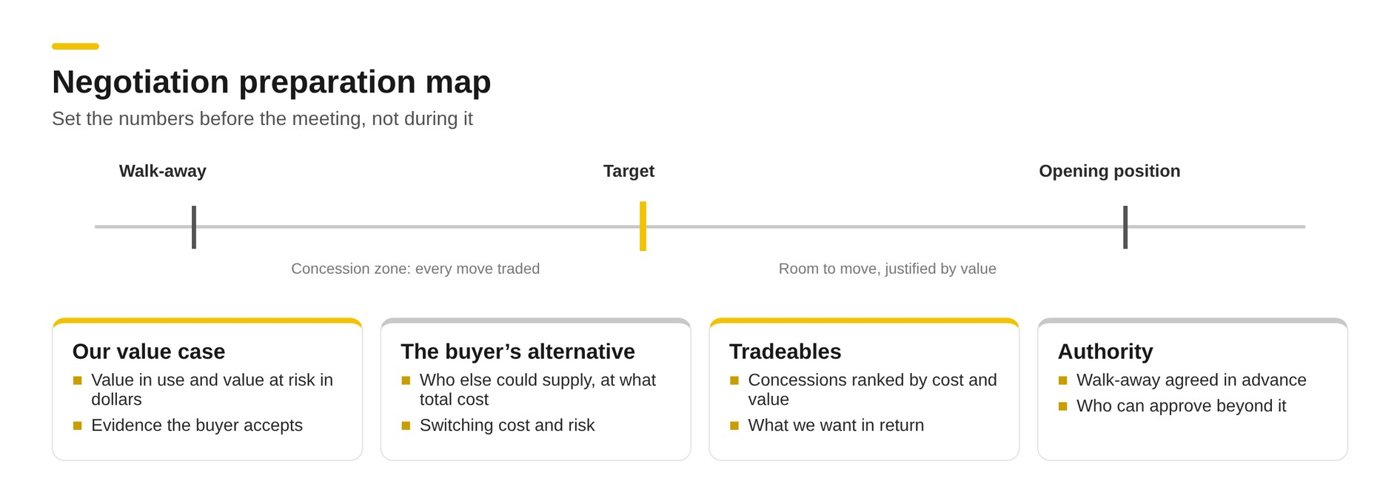
Figure 1. Negotiation preparation map: set the numbers before the meeting, not during it.
Three positions on one line, as the figure shows: an opening that is ambitious but defensible on evidence, a target the business expects to reach, and a walk-away below which the deal costs more than it earns. Between the opening and the target is room to move, justified by value. Between the target and the walk-away is a concession zone where every move is traded. Four inputs sit beneath the line: the value case, the buyer's alternative, the tradeables and the authority to approve.
In illustrative figures, annual sales to a customer are A$2.4 million. Cost recovery needs 3.0 per cent and moving to fair value adds 2.5 per cent, so the target is 5.5 per cent, about A$132,000 a year. The opening is 7 per cent, backed by cost and value evidence. The walk-away is 3 per cent, cost recovery only. That gives the seller 4 points of room and a known target.
At an Australian insulation maker, one of the largest reseller customers said he could double his gross profit by switching suppliers. The business had no central record of competitor prices, so it had no evidence against the claim. The diagnostic recommended one, with won and lost quotes captured; it has not yet been measured.
Five checks test the buyer's alternative before any concession is offered: name the realistic rival and judge whether it can deliver; estimate the customer's switching cost in time, risk and requalification; find out whether the customer has gone to market; look at how past renewals were settled; and check whether orders are already falling. Staff in a timber distribution group proposed pricing what a late delivery would cost the builder, with a crew paid by the hour standing idle. Where the buyer has not gone to market, faces high switching costs and is still ordering normally, make a serious offer and hold back any early concession.
How does concession planning make every give buy a get?
Concession planning is a list, prepared in advance, of what the business can trade, with what it must receive for each item. Price comes last on that list.
An Australian distributor shows the arithmetic. A rep gave a 5 per cent discount to close an order of about A$400,000, and the manager approved it because the deal met the sales target. At an 18 per cent gross margin, the discount cost about A$20,000 of EBIT, which is operating profit before interest and tax. Earning it back needs about A$111,000 of extra sales (illustrative), more than a quarter of the original order again. Fourteen extra days to pay, at a cost of money of 8 per cent a year, would have cost about A$1,200 (illustrative; the real deal included the discount).
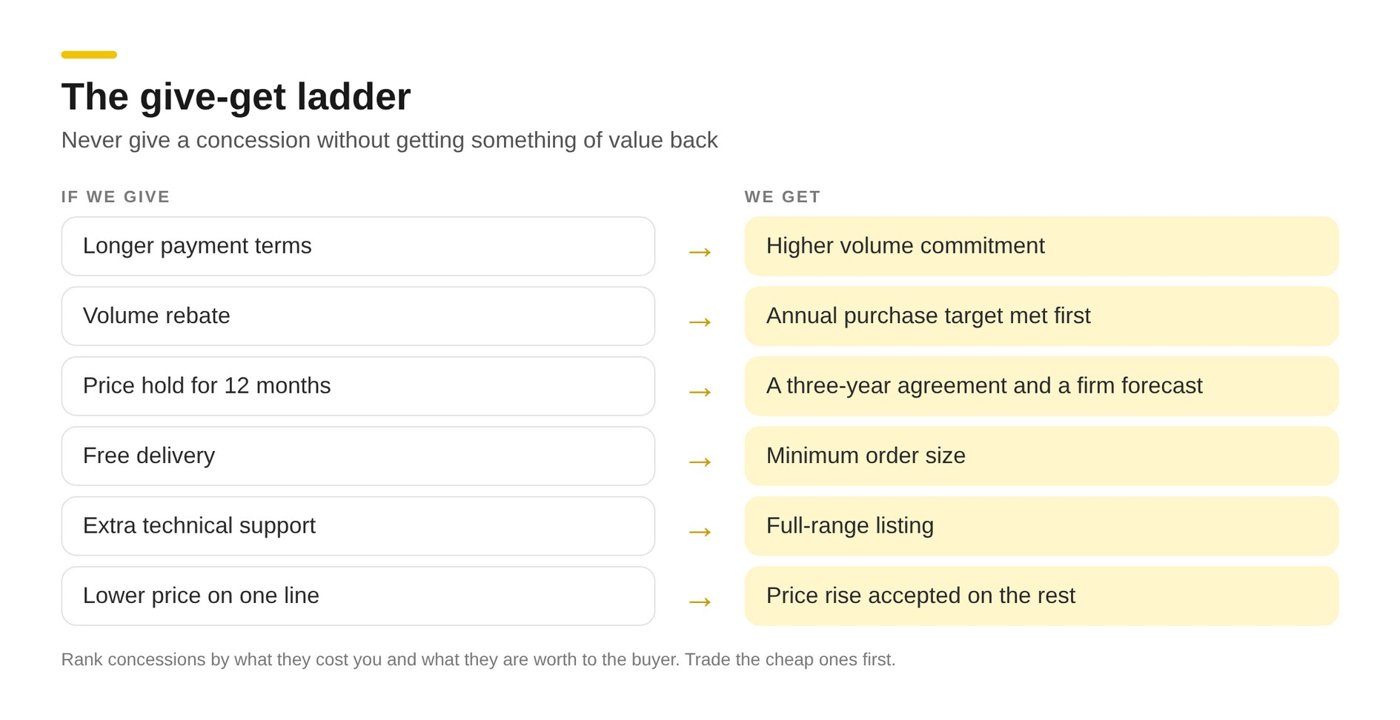
Figure 2. The give-get ladder: never give a concession without getting something of value back.
In the give-get ladder in the figure, longer payment terms buy a higher volume commitment. A 12-month price hold buys a three-year agreement and a firm forecast, and a lower price on one line buys a price rise accepted on the rest. Concessions are ranked by cost to the seller and worth to the buyer, and the cheap ones go first.
Finance sets the dollar cost of each concession and values each get the same way, so sellers are not guessing. In illustrative figures, holding price on 20 low-volume products for 12 months (cost A$8,000) buys a full-range commitment across six categories (worth A$30,000). Extending payment from 30 to 45 days (cost A$6,000) buys a quarterly forecast (worth A$10,000). Keeping one rebate point (cost A$24,000) is paid only on checked volume above a threshold (worth A$36,000). The business gives A$38,000 and receives A$76,000 a year.
Three rules keep the ledger honest. If the customer will give nothing in return, the concession is not offered. Every concession is recorded with a reason code naming the get it bought. Gets are written into the agreement so they can be checked. A concession promised for a later order also carries an end date, so it does not become the customer's standard price, and rebates are paid only on volume above what the customer would have bought anyway.
What goes in a written plan for each key account?
A key-account negotiation plan is a short written document for each major account, prepared before the meeting and approved by the people who own the limits.
At an Australian trade distributor of cabinet and architectural hardware, the largest accounts held the biggest share of the price rise identified and were the most likely to resist it. The proposal was to put numbers on what customers value, such as stock availability and reliable delivery, then build a value-based plan for each of 30 key accounts with its account manager. The program was recommended, with no result yet reported.
A foodservice packaging distributor's New Zealand team, facing a negotiation with one account worth about A$6 million a year, built a pack that pulled together the customer's spend by category, a comparison with similar accounts and a playbook. With the data already in order, it took about two minutes to produce. It realised an 8 per cent increase, worth about A$480,000 a year on an annualised basis, meaning the full-year value at current volumes.
Eight questions, answered in writing: the value delivered against the alternative, in the customer's dollars; the account's net price and margin after rebates, freight and cost to serve; its pricing-power tier; its cube in the 36-cube market model today and the cube the plan aims to reach; the opening, target and walk-away; the priced give-get ladder; the buyer's alternative, people and likely tactics; and which items need Sales Director or CFO approval. Each plan is reviewed before the meeting against the corridor and authority limits, and again afterwards against what was given and received.
What people say
"I don't believe we are equipped at an AM level to arm wrestle and negotiate in this market."
"We are too quick to get to price point without bothering to assess the opportunities."
"Dropping price because a customer said can you do any better."
Which Pricing Periodic Table elements does this paper cover?
- 03 Vq Value quantification: The main quality, service and performance advantages are scored on the Customer Value Discovery canvas and measured in the customer's dollars.
- 10 Pp Pricing power: Each key account has a pricing-power tier that sets the size and pace of the move before any meeting.
- 34 Ng Negotiation skills: Sellers prepare the numbers, evidence, trades and exit in writing, and are measured on concessions given, not win rate.
- 35 Wa Walk-away and alternatives: A walk-away price covering full cost to serve is approved, and the buyer's alternative tested, before every significant negotiation.
- 36 Cn Concession planning: A Finance-priced give-get list exists, and every concession is recorded with the get it bought.
- 39 Ka Key-account negotiation plans: Every major account has a short written plan, reviewed before and after each negotiation.
Score each element from 1 (not in place) to 5 (measured, reviewed on a fixed date and improved); the five executives score separately, then discuss first any element where scores differ by two points or more.
Frequently asked questions
How much does a 5 per cent discount cost?
In the paper's example, a 5 per cent discount on an order of about A$400,000 at an 18 per cent gross margin cost about A$20,000 of EBIT. Earning it back needs about A$111,000 of extra sales, more than a quarter of the original order again.
How should a walk-away price be set before a negotiation?
Set it in advance, write it down and have it approved by the people who own the economics, not by the seller under pressure. Start from the corridor floor and make sure it also covers the full cost to serve the account: freight, rebates, small orders and service.
What is a give-get list in price negotiation?
A list, prepared in advance and priced by Finance, of what the business can trade and what it must receive for each item. In the paper's illustrative example, the business gives A$38,000 and receives A$76,000 a year, and no concession is offered if the customer will give nothing in return.
Where should a business start?
- CEO: Pick the five largest negotiations due in the next six months and ask who holds a written opening, target and walk-away for each.
- CFO: Write a give-get list of six common concessions, with a Finance-approved dollar cost for each and the get it must buy.
- Sales Director: Review the last three large deals, list what was given, what was received and who approved it, and require an approved plan before the next one.
- Marketing Director: Run Customer Value Discovery on each key account and supply the value case in the customer's dollars.
- Pricing Manager: Build each key account's negotiation pack: economics after rebates, position against fair value, pricing-power tier and a priced give-get ladder.
Related reading: Negotiating with Professional Buyers, What Customers Pay For and Pricing Training for B2B Sales Teams.
This paper is drawn from the book Pricing Insight: How to set, negotiate and hold your price, by Ron Wood.
To discuss how this applies to your business, contact Ron Wood.