
.webp)
In Pricing Insight's approach, a price increase is sized from the margin needed, spread by pricing power, run as a ten-step sequence and checked on invoices at 30, 60 and 90 days. At two building-products makers, analysis estimated that only about 80 per cent of each planned increase reached the invoice.
At two Australian building-products makers, one making pipe and the other insulation, analysis estimated that only about 80 per cent of each planned increase reached the invoice. The rest went in small conversations after the start date, none of them recorded as a concession.
Five patterns account for the losses: an increase that is too small, too late, eroded by discounts, poorly signalled or flat across every product. Letters go to accounts departments rather than buyers, account managers face pushback with no script or limit, and price files are updated late or at the wrong rate.
Size each increase from the margin needed and spread it across customers and products by pricing power, recover supplier cost rises between reviews through a written pass-through rule, and run the increase as a ten-step sequence from six months before the start date to three months after it. Check realisation on invoices at 30, 60 and 90 days on a fixed set of customer-product pairs, and give every exception an end date.
Leadership should run the annual increase as a negotiation with every account, since it reaches all of them in the same few weeks, and measure how much of it reaches the pocket price.
What does a lost increase cost?
Four dollars in five. That was the estimated share of each planned increase that reached the invoice at the two building-products makers, and their process looked sound on paper: each year a percentage was set, price files were updated and customers were told.
Staff knew where the rest went. The increase came at a poor point in the customers' year, and notice letters went to accounts departments, not to the buyers who had to accept them. Most of the loss came after the start date, when buyers rang their account managers and pushed back. With no script, no evidence and no limit, the account managers gave ground, customer by customer. The recommendation was a price-increase playbook: set timing, pre-approved letters addressed to buyers, field scripts for common objections, win-loss tracking after each increase, and cost pass-through clauses in major contracts.
A missed or reversed increase has the effect of an unanalysed price cut, and it stays in the base for every later year until it is corrected. Cost rises flow straight through to operating profit (EBIT, profit before interest and tax) unless price follows. For a business recovering cost, each extra point of increase realised adds about 1 per cent of revenue to operating profit; that figure is illustrative, not a result.
The numbers: illustrative figures
- A product sells for A$100 at a 30 per cent gross margin, so it costs A$70.
- The supplier raises that cost by 5 per cent, to A$73.50.
- To hold the A$30 of gross margin, price must rise 3.5 per cent, to A$103.50.
- Overheads are A$25 a unit. Absorbing the cost rise cuts operating profit from A$5 to A$1.50, a fall of 70 per cent.
What are the five ways an increase fails?
Too small, too late, eroded, poorly signalled or flat. A small increase does not cover the cost rise or rebuild margin. A late one follows months in which the business absorbs supplier rises before its own price moves. An eroded one is given back through discounts and overrides once live; an override is a one-off price below the customer's agreed price. A poorly signalled one reaches customers first on an invoice. A flat one applies one percentage across the board, overpricing some lines and underpricing others.
A door hardware business skipped general increases for three to five years because one executive did not want to upset customers. With no written process, its increase was too small, too late and poorly signalled all at once.
At a timber and building-products distributor, a leader described a supplier giving 90 days' notice of a rise, and account managers leaving the customer price file unchanged until the 90 days had passed. In his words: "Straight away you're purchasing at a higher value yet you continue to sell to the client at the same price. Margin erosion has already won." Staff proposed a named owner for each increase and same-day updates to customer price files.
An increase can also be announced and then given back. At the Australian arm of a global office-technology company, a staff member described the response to resistance: "Sometimes they reject an increase from [brand] and we decrease it to retain them." The diagnostic recorded no result.
In each of these businesses the increase was run as an office task, with no owner for the result from design through to the invoice and no measure of how much of the planned increase reached the pocket price, which is what the business keeps after every discount, rebate and cost of the sale.
How should an increase be sized and spread?
Three sources of price inflation. Cost inflation comes from raw materials, energy and the exchange rate. Demand inflation comes from interest rates, government spending and population. Value inflation is the third: raising price on products and customers that were priced below their value. It is the one source the business controls.
An Australian maker of medical consumables and sterile procedure packs faced fast-rising input costs: over two years energy was up about 35 per cent, resin about 40 per cent and wages about 15 per cent. Its target for extra revenue from the increase was raised to about A$6–8 million, against about A$5 million of expected cost increases, and the cap on any single increase rose from 5 to 8 per cent. A cost-burdened inflation rate of 3.7 per cent was set as the break-even line, below which the business would go backwards in real terms. Four scenarios, all projections, were rebuilt around the higher target.
Holding margin dollars takes one line of arithmetic: the price rise needed equals the cost rise multiplied by one minus the gross margin. At a 30 per cent margin, a 5 per cent cost rise needs 3.5 per cent; at a 10 per cent margin, it needs 4.5 per cent. Figure 1 gives the required rise for gross margins from 10 to 50 per cent and cost rises from 2 to 10 per cent; low-margin products need almost the full cost rise passed through.
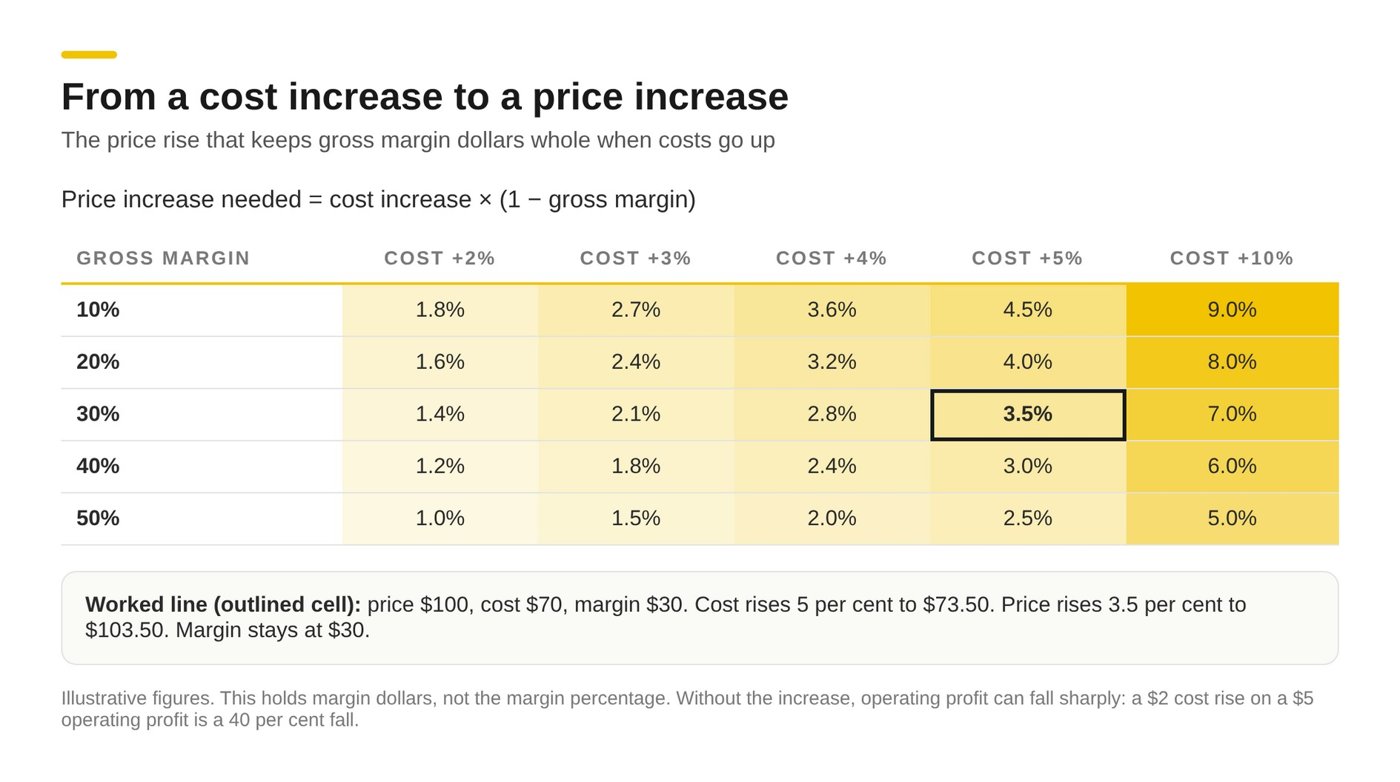
Figure 1. From a cost increase to a price increase.
A flat percentage spreads the total evenly regardless of margin. Distribution staff describe the cost: "blanket pricing means some products lose margin, just because it looks 'cleaner'."
A pricing-power tier for each customer and each product does the spreading. A scorecard weights switching cost, price awareness, relationship depth, growth and profitability, and places customers in four tiers: harvest, protect, monitor and risk. In a default setting, harvest customers take 1.3 times the base increase and those at risk take 0.7 times. Applied to products as well, this gives each customer-product pair its own increase. Two limits keep it safe. A price corridor, the agreed range between floor and ceiling for each product, stops any price going above what the market will carry, and a cap on each account's total movement in one round stages large corrections over two or three rounds.
Key value items, the few lines customers use to judge the whole list, take a measured increase checked against the market. Low-ticket lines that customers rarely price-check can carry more.
How are supplier cost rises recovered between reviews?
When metal, freight, energy or the dollar move during the year, margin shrinks until the next review. Commercial staff describe the bind: "1 price increase once a year when our cogs change constantly through year which affects our margins because our price is locked in."
A pass-through rule needs four parts:
- A trigger. A cost movement above a set percentage, or a named index moving by a set amount.
- A decision owner. Usually the Pricing Council, the cross-functional group that makes pricing decisions.
- A time limit. A fixed period from trigger to start date.
- A symmetry rule. When costs fall, prices hold unless the business decides to share the saving with a particular customer.
Some cost recovery cannot happen through a price letter at all. An Australian maker of compostable food packaging paid a major customer a 26 per cent rebate, money returned after the sale, which could only be reopened at the next contract review. About a dozen lines were selling about 25 per cent below similar customers on a net basis. The firm planned two separate conversations, so the buyer could not trade one against the other and settle both at the lower figure. First, an immediate pass-through letter of about 3 per cent, backed by the national producer price index and presented as a permanent change, with a further 3–5 per cent on lines furthest below benchmark and no line above 10 per cent in one round. Second, at contract review, a cut in the rebate to 22 per cent with a stated path towards 20 per cent. The combined effect was projected at about A$290,000 a year at current volumes.
Put lasting input-cost rises into the price. A surcharge is easier for the customer to challenge or remove, so it suits only short-lived costs such as a brief freight spike.
How should the ten-step sequence and the conversation run?
Ten steps, starting six months before the start date and ending three months after it, each with an owner and a date. In Figure 2, steps 1 to 3 prepare the customer, step 4 is the request and steps 5 to 10 secure the increase.
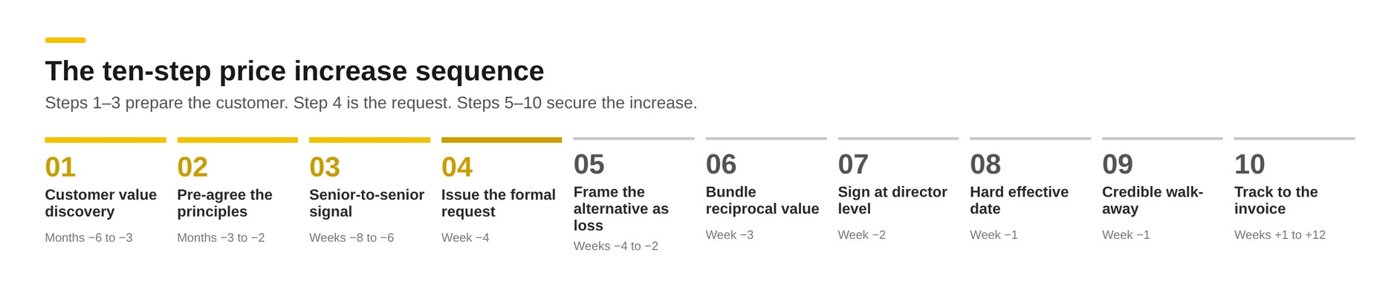
Figure 2. The ten-step price increase sequence.
Each step, its timing and what happens:
- 1. Customer value discovery (months −6 to −3): Score the customer's value in use and value at risk on the Customer Value Discovery canvas.
- 2. Pre-agree three principles (months −3 to −2): Costs have moved, service must be funded, the value gap is acknowledged.
- 3. Senior-to-senior signal (weeks −8 to −6): A director tells the customer's senior people an increase is coming.
- 4. Issue the formal request (week −4): Anchored at full cost recovery plus margin restoration.
- 5. Frame the alternative as loss (weeks −4 to −2): The alternative to the increase is a loss of service, not the old price.
- 6. Bundle reciprocal value (week −3): Give procurement something to report as a win.
- 7. Sign at director level (week −2, before any concession): No movement below target without approval.
- 8. Hard effective date (week −1): A closed window; no orders at old prices after it.
- 9. Credible walk-away (week −1, prepared in advance): 10–20% of products the business would drop rather than discount.
- 10. Track to the invoice (weeks +1 to +12): Written acceptance, then checks of invoice prices at days 30, 60 and 90.
Step 1 uses the Customer Value Discovery canvas. The account team lists what the customer gains under value in use (Tangible, the What; Transactional, the How; Tradeable, the How much) and what it avoids under value at risk (supply failure, product or service failure, technical support failure). Importance, and the performance of the business and its nearest competitor, are each scored 0 to 10. The largest gaps in the business's favour, converted to dollars the customer's finance team can test, become the value lines in the request at step 4. Steps 1 to 3 put the case to the customer before the number. Overrides and discount levels are cut before the start date, so the increase is not diluted before it starts.
Three positions in the conversation. The opening is anchored above target and must be defensible, the target is the planned increase, and the walk-away is the floor, usually cost recovery alone. A stacked anchor lists the business's own cost rises, not only supplier rises. In a teaching example, customers hear that energy is up 18 per cent, occupancy 15 and wages 12. The business announces a general increase of 7.8 per cent, a letter to each customer offers 6.2 per cent, and after concessions traded for volume commitments the increase settles at 4.2 per cent. Each step down is planned and traded for something.
A won renewal and a lost renewal, compared:
- Opening: won renewal, 12%, backed by cost evidence; lost renewal, 4%, made apologetically.
- Concessions: won renewal, 12 to 9 to 7%, each smaller; lost renewal, 4 to 3 to 2 to 1%, in equal steps.
- In return: won renewal, something received for each step; lost renewal, nothing.
- Close: won renewal, 7% with a 36-month lock-in; lost renewal, 1%, no lock-in.
In the won renewal each concession was smaller than the last and bought something in return; in the lost renewal the steps were equal and bought nothing. Harvest-tier customers are met first, while the sales team's conviction is highest, and risk-tier accounts last, with the most preparation.
What people say
"longer notice to customer of price increases, they always say its too sudden."
"Give customer at least 90 days notice of up coming price rise and discuss the price rise face to face with the Reps top 5 customers."
"Our pricing increases almost always end up going backwards"
How is an increase held through to the invoice?
Some losses after agreement are mechanical. At an Australian maker of steel roofing and wall sheeting, a sales-support employee found customers had paid more for sheeting before the latest general increase than after it: "After the [previous] price increase, the price file had been set at a lower rate." The recommendation included a freeze on further discounting after the rise and a check of the net increase at 90 days, with no result reported.
Checks at 30, 60 and 90 days compare the planned increase with the invoiced price for a fixed set of customer-product pairs, which strips out volume and mix so the figure shows price alone. Each gap needs a reason: a price file error, an approved exception, a field override or a missed notice. Every customer held back from the increase goes on an exceptions register with the reason, the approver and an end date.
Reports separate the annualised value of an increase, its full-year value at current volumes, from the amount realised in the year. Finance signs the baseline before the increase goes live.
The numbers: illustrative figures
- A customer buys A$2.4 million a year at invoice and earns a 20 per cent rebate.
- Target increase: 5.5 per cent, worth A$132,000 a year at invoice.
- After the rebate, A$105,600 a year is kept.
- Applied for 9 of the first 12 months: about A$79,200 realised in year one.
- The board should see A$105,600 annualised and about A$79,200 realised. Reporting A$132,000 as the gain would overstate it.
The pricing manager owns this report, and it goes to the Pricing Council each month until the increase is fully realised.
Which Pricing Periodic Table elements does this paper cover?
- 43 Pi Price increase process: A documented, timed process for planning, communicating and realising each increase, including supplier cost rises between reviews.
- 38 Pv Price-increase negotiation: Increase conversations prepared to a plan, anchored on cost and value, and the increase held once agreed.
- 10 Pp Pricing power: The business knows by product and customer where it can lift price, and spreads each increase by tier.
- 47 Ps Price position and key value items: Key value items are checked against the market and take a measured increase; low-ticket lines carry more.
- 56 Bc Buy-price and cost management: Supplier cost changes are managed at the cost line and passed through under a written rule with a trigger, owner and time limit.
- 48 Kp Price realisation KPIs: Increase realisation is reported at 30, 60 and 90 days on fixed customer-product pairs, annualised and realised shown separately.
Score each element from 1, not in place, to 5, best practice, against what the business does today, with a document or report to support any score of 4 or 5.
Frequently asked questions
How much should prices rise to cover a supplier cost increase?
The price rise needed to hold margin dollars equals the cost rise multiplied by one minus the gross margin. At a 30 per cent margin, a 5 per cent cost rise needs a 3.5 per cent price rise; at a 10 per cent margin, it needs 4.5 per cent.
Why do price increases fail to reach the invoice?
Five patterns account for the losses: an increase that is too small, too late, eroded by discounts, poorly signalled or flat across every product. At two Australian building-products makers, analysis estimated that only about 80 per cent of each planned increase reached the invoice, with the rest lost in small conversations after the start date.
How should a price increase be reported to the board?
Reports separate the annualised value of an increase from the amount realised in the year, and finance signs the baseline before the increase goes live. Realisation is checked on invoices at 30, 60 and 90 days on a fixed set of customer-product pairs, so the figure shows price alone.
Where should a business start?
- Pricing Manager: Pull invoice prices for the top 20 customers on the top 20 products and compare them with last year's planned increase.
- Pricing Manager: List every customer held back from the last increase, with who approved it and when it expires.
- CFO: Set the margin target the next increase must deliver and the break-even line below which the business goes backwards, and sign the baseline before it goes live.
- Marketing Director: Set the start date of the next increase, work back six months and diary steps 1 to 4 of the sequence.
- Sales Director: Prepare the opening, target and walk-away for the largest accounts, and approve no concession below target without a matching gain.
Related reading: How to Pass Through Cost Increases Without Losing Trade Customers, The Price You Actually Keep: Margin Waterfalls, Rebates, Cost to Serve, Overrides and Buy Prices and Preparing for Price Negotiations: Setting the Numbers, the Value Case and the Trades Before the Meeting.
This paper is drawn from the book Pricing Insight: How to set, negotiate and hold your price, by Ron Wood.
To discuss how this applies to your business, contact Ron Wood.