

White paper · Diagnose · 19 min read
Source: the four retailers' public websites, read 5 and 6 November 2026. Retailers are described by sector, not named.
Four building materials retailers, four websites, no trade price on any of them. Two publish a retail price guarantee of 10 or 15 per cent and exclude trade purchases from it. One tells tradespeople the discount is set store by store and ranges from 3 to 7 per cent. The fourth, a trade-only group, publishes credit terms, a late-payment fee and a card surcharge, states that its quotes are not offers, and says nothing about price. The retail price is a public promise. The trade price is whatever the counter, the account manager or the contract makes it.
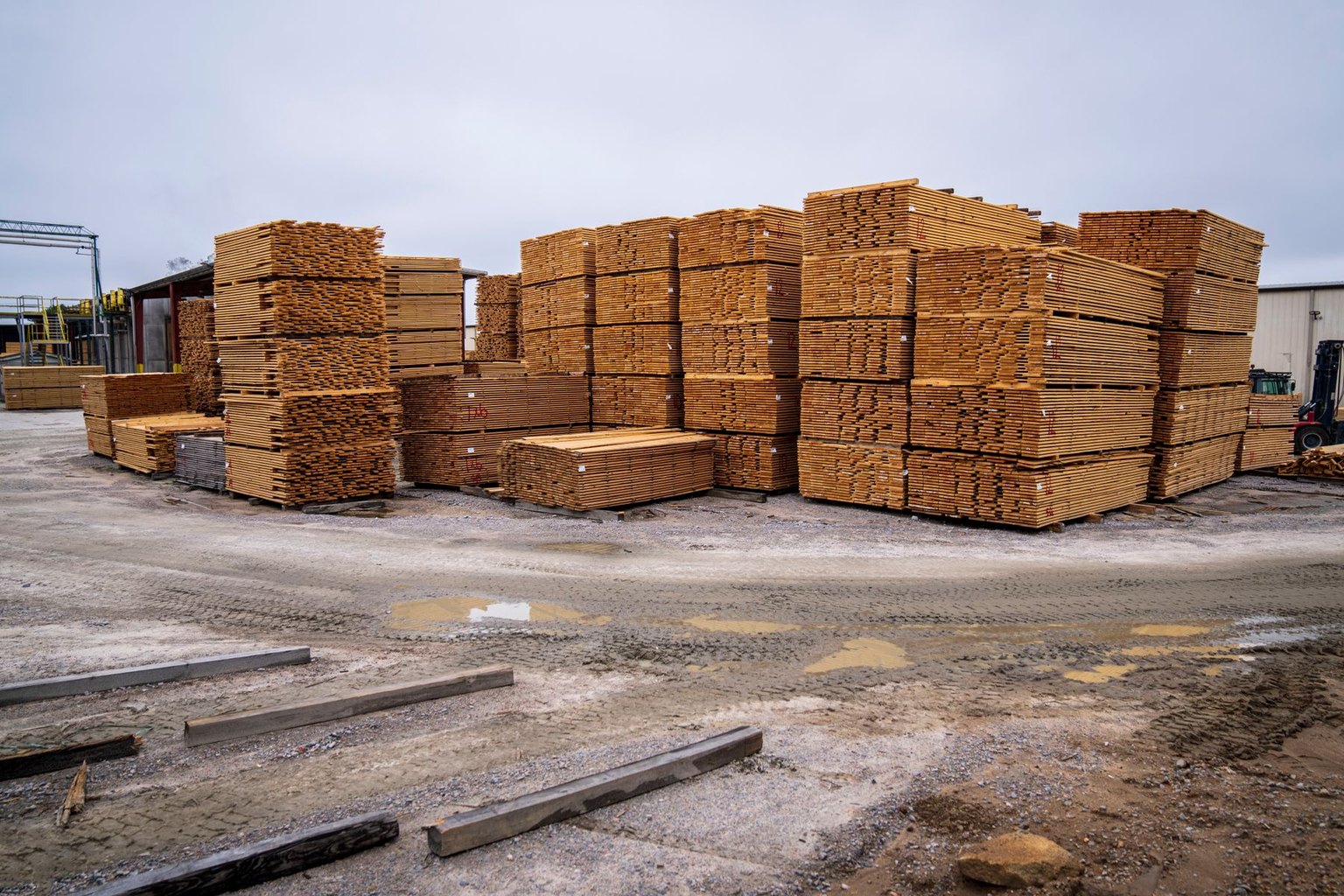
That is the business model, not an oversight. Framing timber, plasterboard, insulation, fasteners and cladding come from the same handful of manufacturers whoever sells them, so a builder can get the same bundle from three merchants and usually does. A pricing capability diagnostic Pricing Insight ran across a co-operative hardware and trade network of more than 80 stores put it in the staff's own words: "In the building industry we all use pretty much the same products." The product cannot carry the margin. What carries it is how the price is set, who is allowed to move it, and whether anyone can see what the invoice kept.
This paper sets out what the diagnostic found, what the four websites show, and what a retailer has to build across strategy, structure and operations to hold its trade margin across a network of stores. It is written for the chief executive, the CFO and the general manager of trade, and it ends with seventeen actions, each with an owner.
The question this paper answers
How does a building materials retailer set, govern and hold its trade prices across a network of stores?
Seven findings, then the work. The findings describe where trade margin is lost in a store network. The work is set out as strategy decisions, structures to design and operations to run, with an illustrative bridge, a 90-day plan and the checklist.
01The retail price is a strategy; the trade price is a process
Two prices, one business. On the retail side the two big-box operators publish a price guarantee that beats a competitor by 10 or 15 per cent on an identical stocked item, with eligibility rules, exclusions and a claim process. The exclusions are the interesting part. The co-operative's guarantee excludes "trade and special quotes, stock liquidations and commercial quantities", excludes on-account purchases, and warns that "variability in timber products may result in some claims being declined". The retail promise stops at the trade counter.
On the trade side there is no equivalent. Asked whether the business had a pricing strategy for trade, one respondent answered: "Our pricing strategy is more a pricing process, we aren't yet clear on where we should pitch or what our value proposition is." Another: "Retail yes. Trade no." What exists instead is a set of discount matrices, a credit application and a habit. The retail strategy decides where the business competes on price and where it holds. The trade matrices decide nothing; they record a discount someone agreed to years ago.
| What the website states | NZ co-operative hardware network | Australian big-box chain, trade site | Australian independent hardware network | Trade-only building centre group |
|---|---|---|---|---|
| Retail price guarantee | Beat by 15%, identical stocked product, local competitor | Beat by 10%, same in-stock item, including GST and delivery | None stated | Not applicable; trade only |
| Trade price visible before purchase | Yes, to account holders in the trade portal | Yes, to members in the app; "do not apply to all products" | No; portal shows invoices and statements | No; quote on request |
| Trade discount stated | "Consistent and competitive pricing across all stores" | "Exclusive trade pricing on a wide range of products throughout the store" | "3% - 7% or more", set by each store | Competitive trade prices, account manager on request |
| One account, one price, every store | One account nationwide | One membership across the store and trade centre network | Home-store account; app discount does not stack | Account and statements by store |
| Quote validity | Not stated | Not stated | Not stated | Quotes are not binding; no validity period |
| Delivery charge | Not stated for trade | Fee depends on location, size and service | Not stated | Not stated, except one store: A$25 one-hour delivery within 10 km |
| Rebates or spend tiers | Not stated | Not stated; association pricing exists | Not stated | Not stated |
| Who sets the trade price | Store, within national matrices | Central, with trade specialists in store | Each independent owner | Account manager, branch and contract |
Source: the four retailers' public websites and trade terms, read 5 and 6 November 2026. "Not stated" means the public site is silent, not that the business has no policy.
02A network prices as many ways as it has stores
One account, many prices. The co-operative promises its trade customers one account usable at any store and "consistent and competitive pricing across all stores". Its own staff described the opposite: each store sets its own discounts, its own method and its own margin appetite, so a builder working across two towns gets two prices from the same brand. Customer pricing loaded at the home branch does not travel, and one respondent described stores in the same brand bidding against each other for a builder's job while the competitor sat across the road.
Independence makes this worse, and the independent Australian network says so on its site: because its stores are independently owned, each store determines what the trade discount will be. Trade-only groups built by acquisition carry the same condition under a different name. Each acquired branch brings its own price file, its own customer terms and its own account manager habits, and a branch that has always run its own profit and loss treats a group price file as advice. In a co-operative the support centre can recommend and cannot require, and competition law stops stores comparing prices with each other. The result is a pricing policy in as many versions as there are owners.
Branch autonomy is usually described as the reason the business wins local jobs. It is also the reason nobody can say what the group's price for a pack of framing timber is. The fix is not central control of every price; it is a published policy with a corridor the branch works inside, covered in Who Owns the Price.
03The matrix is the strategy, and there are too many of them
About 80 national discount matrices, by the staff's own count, against 10 to 12 at the competitors they named. Most are similar, few are retired, and the ones that matter are not competitive on the lines builders check: structural timber, plasterboard and fasteners. So stores build a local matrix on top, then a customer matrix on top of that, then quote the job below all three. Two design faults sit underneath. The matrices discount whole product groups, so a price-sensitive line and a non-sensitive line get the same treatment, and as one respondent noted, "Unfortunately I can bring prices down but not up through this process." And the trade price is derived from the retail price, which carries its own mark-up logic: where the shelf price is high the builder's discount looks generous and the net price is still above market, and where the shelf price is keen a walk-in customer pays the same as a high-spend account.
Eight hands on one price, and the gross margin report shows only the last line.
04Supplier increases arrive late and go through unanalysed
Cost pass-through is the margin lever every building materials retailer pulls, and most pull it late. Board, insulation, roofing and fastener manufacturers announce increases on a calendar; timber moves with the mill. In the diagnostic, stores reported increases reaching them after the effective date or not at all, customer notification left to each account manager, and the increase itself "set and forget": the matrices pass the new cost through at the old margin percentage and nobody checks what the invoice realised. Two things are missing. The first is a dated process from supplier notice to price file to customer letter to invoice check, owned by one person. The second is a true cost. Supplier rebates sit outside the price file, so the cost the store prices from is not the cost it pays, and regional costs, locked national product codes and duplicate items add wrong costs on top. The error is found by a builder holding a competitor's quote.
05Services are given away because nobody prices them
Delivery, estimating, take-offs, special orders and consultation on a fence line or a kitchen each cost the store labour and each is quoted at zero. Of the four websites, one big-box chain states that a delivery fee depends on location, size and service, and one trade-only branch publishes a A$25 one-hour delivery within 10 km. The rest are silent, and "free quotes" appears as a listed store service. In the diagnostic, staff described freight as partly captured and estimating as never captured, in a market where "freight to clients can be free from other merchants leaving us dear and out of touch". A service that is free at the competitor cannot be charged for tomorrow. It can be priced into the offer, tiered by account and withdrawn from accounts that do not earn it.
06Nobody can see the override, the quote outcome or the competitor's price
Three blind spots. Override reports exist but are general, not by representative or customer, and are read daily in some stores and never in others. Won and lost quotes can be recorded in the estimating system but seldom are. Competitor trade pricing is not held anywhere; it arrives as a builder's quote at the counter, is matched or beaten on the spot, then forgotten. The retail side indexes the big-box competitor's shelf prices every week; the trade side, where the dollars are larger, runs on hearsay. The customer is better equipped: staff reported that competitors issue a complete customer price book monthly, while their own system could not produce one without building a quote line by line.
07The people setting prices were never taught to
Margin and mark-up. Staff in the diagnostic asked for training in the difference, in the cost of doing business and in what a discount costs. A 50 per cent mark-up is a 33 per cent margin; a 5 per cent discount on a 25 per cent margin line gives away a fifth of the gross profit. Account managers were described by their own colleagues as relationship managers who could not hold a price, and the default when a competitor's quote arrives is to match it. Floors became prices: "A 5% minimum margin guide is like an ambulance at bottom of hill - becomes a target." Discounts became habits: "Set and standard discounts become sacred cows and are often not relevant." The central pricing team is typically three people who maintain price files and do not set strategy. Several respondents gave the sequence themselves: decide the strategy, then the limits, then train. Training a team to hold a price inside a structure that has no corridor does not hold.
The CFO's question is whether any of this is worth the disruption when stores met their sales targets last year. The diagnostic answer was that margin percentage was sliding while sales held, in a softening market, and that the slide had no single owner.
08Where the fixes sit on the Pricing Periodic Table
Eighteen of the sixty-one elements. Mapped onto the Pricing Periodic Table, the findings touch all three pillars and seven of the nine domains, with the heaviest concentration in Price Architecture (price-setting method, discount structure and tiers, charges for services, price corridors, buy-price and cost management) and Analysis and Processes (market price intelligence, the price increase process, override analysis, key value items). Three are strategy decisions for the chief executive: a written pricing strategy, the retail-trade relationship, and consistency across the network. Three are structures: decision rights, a pricing council and discount authority enforced by the system. The rest are routines, and routines need people trained to run them.
09What to build: strategy, structure, operations
Three kinds of work, in order. Strategy is a set of decisions the chief executive makes and writes down. Structure is the design that carries those decisions into the price file, the matrices and the approval ladder. Operations are the weekly routines that keep the price where the structure put it.
Strategy
Decisions for the chief executive
Five decisions, two pages. None needs new data; all need a signature, and most trade pricing problems in a store network trace back to the fact that nobody has signed anything.
Write the trade pricing strategy and send it to every owner and branch manager.
Two pages: where the business competes on price, where it holds, how it grows margin, and what the price promise covers for trade.
Settle the retail-trade relationship by category.
Which lines are priced retail-less, which on their own trade curve, which are quoted; nothing derived from a shelf mark-up never designed for trade.
Name the key value items by region.
The 100 to 200 lines a builder checks are priced to the market and tracked; the rest of the range carries the margin.
Set profit objectives in gross profit dollars by category and segment.
A margin percentage alone drives stores to protect percentage on small jobs and give away dollars on large ones.
Write the competitor response rule.
What is matched, what is not, who may match it and what the customer must show; a written rule replaces the quote-matching habit at the counter.
If a builder in two of our towns asked for our price on a pack of 90 × 45 framing, would they get the same answer?
Structure
Designs for the CFO and the pricing manager
Six designs. Each replaces something that exists today in 80 versions with one version the system enforces.
Consolidate the discount matrices to a handful tied to annual spend bands.
One list price per line, less a discount that deepens with spend; a builder buying seven times as much gets a better discount, not a price seven times better.
Build a price corridor by category: target, floor and approval band.
The floor covers the cost of doing business; prices inside the corridor need no approval, prices below it need a name.
Publish the discount authority matrix and load it in the system.
Who may approve what depth of discount, a reason code on every exception, and a monthly report by representative and customer.
Price freight, estimating, urgent delivery and special orders as line items.
Included for accounts that earn them, charged to accounts that do not, never silently free.
Put every rebate in a written agreement with a hurdle, a term and a review date.
Paid in arrears on growth or share achieved, never on turnover from the first dollar, and held in a register the pricing manager owns.
Net supplier rebates into the pricing cost, and fix the master data.
The cost the store prices from is the cost it pays; duplicate codes and regional cost errors are corrected before any matrix is redesigned.
Matrix consolidation moves some customers up and some down, and the CFO wants the net effect by customer before the rollout, not after. The pilot in the 90-day plan exists for that reason: one category, the movement modelled customer by customer, the net gain measured against a comparator before any store sees a new matrix.
Operations
Routines for the trade managers and the pricing team
Six routines. Each runs on a calendar, has one owner and produces a report someone reads.
Run supplier increases as a dated process.
Supplier notice, price file, a letter addressed to the buyer, then an invoice check at 30, 60 and 90 days showing what each increase realised by store and customer.
Review overrides weekly, by representative and customer.
The trade manager reads the report, the council sees the trend, and an override without a reason code is a training event.
Issue customer price books monthly.
Every account customer sees its own prices, which removes the quote-by-quote negotiation and makes each increase visible when it takes effect.
Keep a competitor trade price register.
Every competitor quote a builder shows the counter is logged by line, region and date; the key value item list is reset from it each quarter.
Train everyone with discount authority, and tie the authority to a pass.
Margin and mark-up, the cost of a discount, the give-get list and the walk-away; a representative who has not passed does not hold a discount authority.
Hold a monthly pricing council.
Chaired by the chief executive with the CFO, the trade GM, merchandise and the pricing manager; it decides exceptions, reviews realisation and owns the strategy document.
Account managers will say the price book and the register take time they do not have. The time comes back from the negotiations that no longer happen: a builder with a monthly price book does not ring for a price on every job. Negotiation and value-selling methods for the team are covered in Pricing Insight's negotiation workshops.
10An illustrative bridge
For a trade network with A$300 million of revenue and a 28 per cent gross margin, a hypothetical first-year bridge might look like this. The figures are illustrative, in gross profit dollars, before operating cost effects, volume changes, implementation costs and overlap. They are not a benchmark or a forecast for any business.
A$5.1 million is 1.7 per cent of revenue, about 170 basis points of gross margin, before overlap. The overlap is real: a customer whose matrix tier rises and whose freight is now charged will not deliver both gains in full. The CFO reconciles the pools before any figure reaches the board. Price optimisation programs return between 5 and 10 times their cost in year 1; each engagement states its own baseline and its own measured result.
11The first 90 days
Days 1 to 15 extract the price files, every matrix, the override log, rebate schedules, freight and credit data, and reconcile a baseline that finance accepts. Days 16 to 30 build the waterfall in Figure 1 from the business's own data, rank the pools and write the hypotheses with the dollars each would move and a name against each. Days 31 to 60 run three pilots, each measured against a comparator group of stores. Days 61 to 90 publish the two-page strategy, load the authority matrix and hold the first pricing council.
12Action checklist
Seventeen actions, one owner each. An action is done when the evidence in the third column exists, not when the meeting that discussed it has been held.
| Action | Owner | Done when |
|---|---|---|
| 1. Write and sign the two-page trade pricing strategy | CEO | Sent to every owner and branch manager, dated and signed |
| 2. Settle the retail-trade relationship by category | CEO with merchandise | Category list published: retail-less, trade curve, quoted |
| 3. Name the key value items by region | Trade GM | KVI list with a competitor price source per line |
| 4. Set profit objectives in gross profit dollars by category and segment | CFO | Targets in the budget and on the store scorecard |
| 5. Write the competitor response rule | CEO | One-page rule at every trade counter |
| 6. Consolidate discount matrices to spend bands | Pricing manager | Matrix count published; every customer mapped to a band |
| 7. Build the price corridor by category | CFO and pricing manager | Target, floor and approval band loaded in the system |
| 8. Publish and load the discount authority matrix | CFO | No price below floor without an approval and a reason code |
| 9. Price freight, estimating, urgent delivery and special orders | Trade GM | Charges on the quote template, tiered by account |
| 10. Put every rebate in a written agreement with a hurdle | Sales director | Agreement register complete; no rebate without a term and review date |
| 11. Net supplier rebates into pricing cost; fix master data | CFO and IT | Net cost visible to everyone who sets a price |
| 12. Run the supplier increase process | Pricing manager | Realisation report per increase at 30, 60 and 90 days |
| 13. Review overrides weekly by representative and customer | Trade managers | Weekly review minuted; monthly trend to the council |
| 14. Issue customer price books monthly | Pricing manager and IT | Books issued to every account customer |
| 15. Keep a competitor trade price register | Trade support | Register updated weekly; KVI list reset each quarter |
| 16. Train everyone with discount authority; tie authority to a pass | Sales director | Register of trained staff; authority removed from the untrained |
| 17. Hold a monthly pricing council | CEO | Agenda, minutes and decisions published to the network |
13Frequently asked questions
Can a co-operative or franchise network run one trade pricing strategy at all?
Yes, with limits. The support centre cannot set a member's price and members cannot agree prices with each other. It can publish a strategy, a recommended corridor, a consolidated matrix set and a competitor response rule, and make the realisation report visible to every owner. Most owners adopt what is written down and measured because it removes work.
Should trade prices be derived from retail prices?
Only for the lines where retail and trade buy the same item the same way, which is a small part of the range. Structural timber, board, insulation and fixings need their own trade curve priced to the market, with the shelf price set from the trade price rather than the reverse.
How many discount matrices should a network have?
A handful: one list price per line and a small number of spend bands, with regional variation handled through the key value item list rather than separate matrices. Staff in the diagnostic compared about 80 national matrices with 10 to 12 at the competitors they named.
What is the first thing to fix?
Visibility. Until the business can see the realised price by store, customer and line beside the shelf price, every other change is argued from opinion. The waterfall in Figure 1, built from the business's own data, is the first deliverable in the 90-day plan.
Where do account managers fit?
Inside the corridor. An account manager with a target, a floor, a give-get list and a monthly price book negotiates less and keeps more. One with none of those is the price-setting function, whatever the organisation chart says.
14How Pricing Insight helps
The starting point is the business's own transactions, matrices and quotes, not a template. Our Pricing Diagnostic and Quick Wins builds the waterfall from the price files, establishes a finance-reconciled baseline, records what the stores say about how prices are set, and ranks the pools. The work runs in three linked workstreams.
Diagnostic
We extract price files, matrices, overrides, rebates, freight and credits, reconcile the baseline by store and category, and build the shelf-to-realised waterfall. A capability survey and interviews across the support centre and the stores record how prices are set today. The output is a sized opportunity register with an owner for each hypothesis.
Strategy and structure
We draft the two-page strategy for the chief executive to sign, design the consolidated matrices, the corridor and the authority ladder, and pilot the changes in a small number of stores against a comparator. Project Blackbird prices the trade range to value and pricing power line by line where the data supports it.
Operations and capability
We stand up the increase process, the override review, the price book and the council, and train everyone with discount authority through Pricing University in margin arithmetic, value selling and negotiation, so the gains hold after the engagement closes.
Discuss trade pricing in your network
The first conversation covers where the trade price is set today in your business, what the stores are doing differently from each other, and what the data would need to show before anything changes. Ron Wood, +61 410 534 099.
Ron Wood is the Founder and Managing Director of Pricing Insight, an Australian pricing strategy consultancy he established in 2007. He has worked in pricing for around 30 years, first as a pricing and commercial manager in consumer goods, building materials and capital equipment, and since then across more than 160 pricing engagements in Australia, New Zealand, South East Asia, India, the United States and the United Kingdom, including building materials manufacturers, hardware co-operatives and trade distributors. He also founded Pricing University, which has trained more than 5,000 executives.
To discuss how this applies to your network, contact Ron Wood at info@pricinginsight.com.au or on +61 410 534 099, or visit Pricing Insight.
Retailers in this paper are described by sector and are not named. Website observations are from the public sites and trade terms as read on 5 and 6 November 2026; "not stated" means the site is silent, not that the business has no policy. Quotations from the diagnostic are reproduced as written, without names. The waterfall in Figure 1 and the bridge in Section 10 are hypothetical worked examples for explanation only; they do not describe any particular business and no figure in them should be read as typical or guaranteed. Legal references are general and are not legal advice.